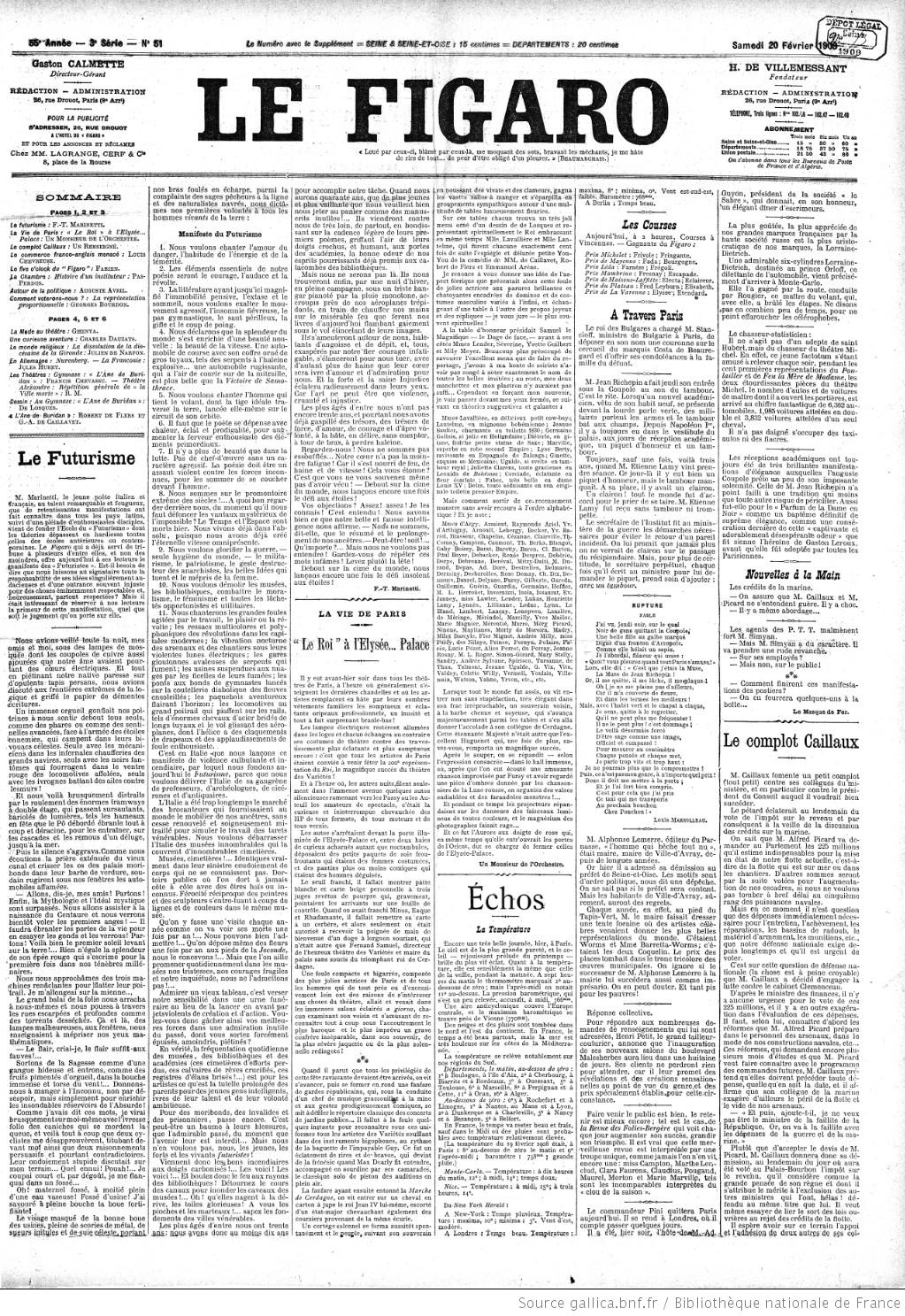
Fondazione e Manifesto del futurismo. Pubblicato dal “Figaro” di Parigi il 20 Febbraio 1909. Foundation and Manifesto of Futurism. Published by Le Figaro of Paris on 20 February 1909.
Avevamo vegliato tutta la notte — i miei amici ed io — sotto lampade di moschea dalle cupole di ottone traforato, stellate come le nostre anime, perchè come queste irradiate dal chiuso fulgòre di un cuore elettrico. Avevamo lungamente calpestata su opulenti tappeti orientali la nostra atavica accidia, discutendo davanti ai confini estremi della logica ed annerendo molta carta di frenetiche scritture. We had kept watch all night, my friends and I, under mosque lamps with pierced brass domes, starred like our souls because, like them, they radiated from the enclosed blaze of an electric heart. For a long time we had trampled our ancestral idleness on opulent oriental carpets, arguing at the extreme borders of logic and blackening much paper with frantic writing.
Un immenso orgoglio gonfiava i nostri petti, poichè ci sentivamo soli, in quell’ora, ad esser desti e ritti, come fari superbi o come sentinelle avanzate, di fronte all’esercito delle stelle nemiche, occhieggianti dai loro celesti accampamenti. An immense pride swelled our chests, because at that hour we felt alone in being awake and standing, like proud lighthouses or forward sentries before the army of enemy stars, watching from their celestial encampments.
Soli coi fuochisti che s’agitano davanti ai forni infernali delle grandi navi, soli coi neri fantasmi che frugano nelle pance arroventate delle locomotive lanciate a pazza corsa, soli cogli ubriachi annaspanti, con un incerto batter d’ali, lungo i muri della città. Alone with the stokers moving before the infernal furnaces of great ships, alone with the black phantoms rummaging in the red-hot bellies of locomotives hurled into mad speed, alone with the drunks floundering along the city walls with an uncertain beating of wings.
Sussultammo ad un tratto, all’udire il rumore formidabile degli enormi tramvai a due piani, che passano sobbalzando, risplendenti di luci multicolori, come i villaggi in festa che il Po straripato squassa e sràdica d’improvviso, per trascinarli fino al mare, sulle cascate e attraverso i gorghi di un diluvio. Suddenly we started at the formidable noise of the enormous double-decker tramcars passing in jolts, shining with multicolored lights like festival villages that the flooded Po shakes loose and uproots at once, dragging them to the sea over waterfalls and through the whirlpools of a deluge.
Poi il silenzio divenne più cupo. Ma mentre ascoltavamo l’estenuato borbottìo di preghiere del vecchio canale e lo scricchiolar dell’ossa dei palazzi moribondi sulle loro barbe di umida verdura, noi udimmo subitamente ruggire sotto le finestre gli automobili famelici. Then the silence grew darker. But while we listened to the exhausted muttering of prayers from the old canal and the creaking bones of dying palaces on their beards of damp greenery, we suddenly heard the famished automobiles roar beneath the windows.
— Andiamo, diss’io; andiamo, amici! Partiamo! Finalmente, la mitologia e l’ideale mistico sono superati. Noi stiamo per assistere alla nascita del Centauro e presto vedremo volare i primi Angeli! Bisognerà scuotere le porte della vita per provarne i cardini e i chiavistelli! “Let us go,” I said; “let us go, friends! Let us leave! At last mythology and the mystical ideal have been surpassed. We are about to witness the birth of the Centaur, and soon we shall see the first Angels fly. We must shake the doors of life to test their hinges and bolts.”
Partiamo! Ecco, sulla terra, la primissima aurora! Non v’è cosa che agguagli lo splendore della rossa spada del sole che schermeggia per la prima volta nelle nostre tenebre millenarie! Let us leave. Here, on earth, is the very first dawn. Nothing equals the splendor of the sun’s red sword fencing for the first time in our millennial darkness.
Ci avvicinammo alle tre belve sbuffanti, per palparne amorosamente i torridi petti. Io mi stesi sulla mia macchina come un cadavere nella bara, ma subito risuscitai sotto il volante, lama di ghigliottina che minacciava il mio stomaco. We approached the three snorting beasts to touch their torrid chests with love. I stretched out on my machine like a corpse in its coffin, but immediately rose again beneath the steering wheel, a guillotine blade threatening my stomach.
La furente scopa della pazzia ci strappò a noi stessi e ci cacciò attraverso le vie, scoscese e profonde come letti di torrenti. Qua e là una lampada malata, dietro i vetri d’una finestra, c’insegnava a disprezzare la fallace matematica dei nostri occhi perituri. The furious broom of madness tore us from ourselves and drove us through streets as steep and deep as torrent beds. Here and there a sick lamp behind a window taught us to despise the deceptive mathematics of our mortal eyes.
Io gridai: — Il fiuto, il fiuto solo, basta alle belve! I shouted: “Scent, scent alone, is enough for beasts.”
E noi, come giovani leoni, inseguivamo la Morte, dal pelame nero maculato di pallide croci, che correva via pel vasto cielo violaceo, vivo e palpitante. And we, like young lions, chased Death, its black fur mottled with pale crosses, as it ran across the vast violet sky, alive and beating.
Eppure non avevamo un’Amante ideale che ergesse fino alle nuvole la sua sublime figura, nè una Regina crudele a cui offrire le nostre salme, contorte a guisa di anelli bisantini! Nulla, per voler morire, se non il desiderio di liberarci finalmente dal nostro coraggio troppo pesante! And yet we had no ideal Beloved lifting her sublime figure to the clouds, nor any cruel Queen to whom we might offer our bodies, twisted like Byzantine rings. Nothing made us want to die except the desire to free ourselves at last from our too-heavy courage.
E noi correvamo schiacciando su le soglie delle case i cani da guardia che si arrotondavano, sotto i nostri pneumatici scottanti, come solini sotto il ferro da stirare. And we ran on, crushing watchdogs on the thresholds of houses as they rounded beneath our burning tires like collars under an iron.
La Morte, addomesticata, mi sorpassava ad ogni svolto, per porgermi la zampa con grazia, e a quando a quando si stendeva a terra con un rumore di mascelle stridenti, mandandomi, da ogni pozzanghera, sguardi vellutati e carezzevoli. Death, domesticated, passed me at every turn to offer its paw gracefully, and from time to time lay down with the sound of grinding jaws, sending me velvety, caressing glances from every puddle.
— Usciamo dalla saggezza come da un orribile guscio, e gettiamoci, come frutti pimentati d’orgoglio entro la bocca immensa e tôrta del vento! Diamoci in pasto all’Ignoto, non già per disperazione, ma soltanto per colmare i profondi pozzi dell’Assurdo! “Let us leave wisdom as if leaving a horrible shell, and throw ourselves, like fruits spiced with pride, into the immense twisted mouth of the wind. Let us feed ourselves to the Unknown, not from despair, but only to fill the deep wells of the Absurd.”
Avevo appena pronunziate queste parole, quando girai bruscamente su me stesso, con la stessa ebrietà folle dei cani che voglion mordersi la coda, ed ecco ad un tratto venirmi incontro due ciclisti, che mi diedero torto, titubando davanti a me come due ragionamenti, entrambi persuasivi e nondimeno contradittorii. I had scarcely spoken these words when I spun sharply around, with the same mad intoxication as dogs trying to bite their tails, and suddenly two cyclists came toward me, proving me wrong as they hesitated before me like two arguments, both persuasive and nevertheless contradictory.
Il loro stupido dilemma discuteva sul mio terreno. Che noia! Auff! Tagliai corto, e, pel disgusto, mi scaraventai colle ruote all’aria in un fossato. Their stupid dilemma argued on my ground. What boredom. Enough. I cut it short and, from disgust, hurled myself wheels-up into a ditch.
Oh! materno fossato, quasi pieno di un’acqua fangosa! Bel fossato d’officina! Io gustai avidamente la tua melma fortificante, che mi ricordò la santa mammella nera della mia nutrice sudanese. Oh maternal ditch, almost full of muddy water. Beautiful workshop ditch. I greedily tasted your strengthening slime, which reminded me of the holy black breast of my Sudanese nurse.
Quando mi sollevai — cencio sozzo e puzzolente — di sotto la macchina capovolta, io mi sentii attraversare il cuore, deliziosamente, dal ferro arroventato della gioia. When I rose, a filthy and stinking rag, from beneath the overturned machine, I felt the red-hot iron of joy pass deliciously through my heart.
Una folla di pescatori armati di lenza e di naturalisti podagrosi tumultuava già intorno al prodigio. Con cura paziente e meticolosa, quella gente dispose alte armature ed enormi reti di ferro per pescare il mio automobile, simile ad un gran pescecane arenato. A crowd of fishermen armed with lines and gouty naturalists was already in uproar around the prodigy. With patient and meticulous care, those people set up tall structures and enormous iron nets to fish out my automobile, like a great stranded shark.
La macchina emerse lentamente dal fosso, abbandonando nel fondo, come squame, la sua pesante carrozzeria di buon senso e le sue morbide imbottiture di comodità. The machine slowly emerged from the ditch, leaving at the bottom, like scales, its heavy bodywork of common sense and its soft upholstery of comfort.
Credevano che fosse morto, il mio bel pescecane, ma una mia carezza bastò a rianimarlo, ed eccolo risuscitato, eccolo in corsa, di nuovo, sulle sue pinne possenti! They thought my beautiful shark was dead, but one caress from me was enough to revive it, and there it was resurrected, running again on its powerful fins.
Allora, col volto coperto della buona melma delle officine — impasto di scorie metalliche, di sudori inutili, di fuliggini celesti — noi, contusi e fasciate le braccia ma impavidi, dettammo le nostre prime volontà a tutti gli uomini vivi della terra. Then, with our faces covered in the good mud of workshops, a mixture of metallic slag, useless sweat, and celestial soot, bruised and with arms bandaged but undaunted, we dictated our first will to all the living men of the earth.
1. Noi vogliamo cantare l’amor del pericolo, l’abitudine all’energia e alla temerità. 1. We want to sing the love of danger, the habit of energy and recklessness.
2. Il coraggio, l’audacia, la ribellione, saranno elementi essenziali della nostra poesia. 2. Courage, audacity, and rebellion will be essential elements of our poetry.
3. La letteratura esaltò fino ad oggi l’immobilità pensosa, l’estasi e il sonno. Noi vogliamo esaltare il movimento aggressivo, l’insonnia febbrile, il passo di corsa, il salto mortale, lo schiaffo ed il pugno. 3. Literature has until now exalted thoughtful immobility, ecstasy, and sleep. We want to exalt aggressive movement, feverish insomnia, the running stride, the somersault, the slap, and the punch.
4. Noi affermiamo che la magnificenza del mondo si è arricchita di una bellezza nuova: la bellezza della velocità. Un automobile da corsa col suo cofano adorno di grossi tubi simili a serpenti dall’alito esplosivo, un automobile ruggente, che sembra correre sulla mitraglia, è più bello della Vittoria di Samotracia. 4. We affirm that the magnificence of the world has been enriched by a new beauty: the beauty of speed. A racing automobile with its hood adorned by great tubes like serpents with explosive breath, a roaring automobile that seems to run on machine-gun fire, is more beautiful than the Victory of Samothrace.
5. Noi vogliamo inneggiare all’uomo che tiene il volante, la cui asta ideale attraversa la Terra, lanciata a corsa, essa pure, sul circuito della sua orbita. 5. We want to hymn the man who holds the steering wheel, whose ideal shaft crosses the Earth, itself launched at speed along the circuit of its orbit.
6. Bisogna che il poeta si prodighi, con ardore, sfarzo e munificenza, per aumentare l’entusiastico fervore degli elementi primordiali. 6. The poet must spend himself with ardor, splendor, and munificence, to increase the enthusiastic fervor of the primordial elements.
7. Non v’è più bellezza, se non nella lotta. Nessuna opera che non abbia un carattere aggressivo può essere un capolavoro. La poesia deve essere concepita come un violento assalto contro le forze ignote, per ridurle a prostrarsi davanti all’uomo. 7. There is no longer beauty except in struggle. No work without an aggressive character can be a masterpiece. Poetry must be conceived as a violent assault against unknown forces, to reduce them to prostration before man.
8. Noi siamo sul promontorio estremo dei secoli! Perchè dovremmo guardarci alle spalle, se vogliamo sfondare le misteriose porte dell’Impossibile? Il Tempo e lo Spazio morirono ieri. Noi viviamo già nell’assoluto, poichè abbiamo già creata l’eterna velocità onnipresente. 8. We stand on the extreme promontory of the centuries. Why should we look behind us if we want to break through the mysterious doors of the Impossible? Time and Space died yesterday. We already live in the absolute, because we have already created eternal omnipresent speed.
9. Noi vogliamo glorificare la guerra — sola igiene del mondo — il militarismo, il patriottismo, il gesto distruttore dei libertarî, le belle idee per cui si muore e il disprezzo della donna. 9. We want to glorify war, the only hygiene of the world, militarism, patriotism, the destructive gesture of libertarians, the beautiful ideas for which one dies, and contempt for woman.
10. Noi vogliamo distruggere i musei, le biblioteche, le accademie d’ogni specie, e combattere contro il moralismo, il femminismo e contro ogni viltà opportunistica o utilitaria. 10. We want to destroy museums, libraries, academies of every kind, and fight against moralism, feminism, and every opportunistic or utilitarian cowardice.
11. Noi canteremo le grandi folle agitate dal lavoro, dal piacere o dalla sommossa: canteremo le maree multicolori e polifoniche delle rivoluzioni nelle capitali moderne; canteremo il vibrante fervore notturno degli arsenali e dei cantieri incendiati da violente lune elettriche. 11. We will sing the great crowds stirred by work, pleasure, or revolt; we will sing the multicolored and polyphonic tides of revolutions in modern capitals; we will sing the vibrating nocturnal fervor of arsenals and shipyards set ablaze by violent electric moons.
Le stazioni ingorde, divoratrici di serpi che fumano; le officine appese alle nuvole pei contorti fili dei loro fumi; i ponti simili a ginnasti giganti che scavalcano i fiumi, balenanti al sole con un luccichio di coltelli; i piroscafi avventurosi che fiutano l’orizzonte. The greedy stations, devourers of smoking serpents; factories hanging from the clouds by the twisted threads of their fumes; bridges like giant gymnasts straddling rivers, flashing in the sun with the gleam of knives; adventurous steamships scenting the horizon.
Le locomotive dall’ampio petto, che scalpitano sulle rotaie, come enormi cavalli d’acciaio imbrigliati di tubi, e il volo scivolante degli aereoplani, la cui elica garrisce al vento come una bandiera e sembra applaudire come una folla entusiasta. Broad-chested locomotives pawing the rails like enormous steel horses bridled with tubes, and the gliding flight of airplanes, whose propeller chatters in the wind like a flag and seems to applaud like an enthusiastic crowd.
È dall’Italia, che noi lanciamo pel mondo questo nostro manifesto di violenza travolgente e incendiaria, col quale fondiamo oggi il « Futurismo », perchè vogliamo liberare questo paese dalla sua fetida cancrena di professori, d’archeologhi, di ciceroni e d’antiquarii. It is from Italy that we launch through the world this manifesto of overwhelming and incendiary violence, with which today we found Futurism, because we want to free this country from its fetid gangrene of professors, archaeologists, guides, and antiquarians.
Già per troppo tempo l’Italia è stata un mercato di rigattieri. Noi vogliamo liberarla dagl’innumerevoli musei che la coprono tutta di cimiteri innumerevoli. For too long already Italy has been a junk dealers’ market. We want to free it from the innumerable museums that cover it entirely with innumerable cemeteries.
Musei: cimiteri! Identici, veramente, per la sinistra promiscuità di tanti corpi che non si conoscono. Musei: dormitorî pubblici in cui si riposa per sempre accanto ad esseri odiati o ignoti! Musei: assurdi macelli di pittori e scultori che vanno trucidando si ferocemente a colpi di colori e di linee, lungo le pareti contese! Museums: cemeteries. Truly identical, because of the sinister promiscuity of so many bodies that do not know one another. Museums: public dormitories where one rests forever beside hated or unknown beings. Museums: absurd slaughterhouses of painters and sculptors who go on butchering each other ferociously with blows of color and line along contested walls.
Che ci si vada in pellegrinaggio, una volta all’anno, come si va al Camposanto nel giorno dei morti, ve lo concedo. Che una volta all’anno sia deposto un omaggio di fiori davanti alla Gioconda, ve lo concedo. That one should go there on pilgrimage once a year, as one goes to the cemetery on the day of the dead, I grant you. That once a year a tribute of flowers be placed before the Mona Lisa, I grant you.
Ma non ammetto che si conducano quotidianamente a passeggio per i musei le nostre tristezze, il nostro fragile coraggio, la nostra morbosa inquietudine. Perchè volersi avvelenare? Perchè volere imputridire? But I do not accept that our sadness, our fragile courage, our morbid restlessness be taken daily for walks through museums. Why want to poison oneself? Why want to rot?
E che mai si può vedere, in un vecchio quadro, se non la faticosa contorsione dell’artista, che si sforzò di infrangere le insuperabili barriere opposte al desiderio di esprimere interamente il suo sogno? And what can one ever see in an old painting except the laborious contortion of the artist, who strained to break the insuperable barriers opposed to the desire to express his dream entirely?
Ammirare un quadro antico equivale a versare la nostra sensibilità in un’urna funeraria, invece di proiettarla lontano, in violenti getti di creazione e di azione. To admire an ancient painting is equivalent to pouring our sensibility into a funerary urn instead of projecting it far away in violent jets of creation and action.
Volete dunque sprecare tutte le vostre forze migliori, in questa eterna ed inutile ammirazione del passato, da cui uscite fatalmente esausti, diminuiti e calpesti? Do you then want to waste all your best forces in this eternal and useless admiration of the past, from which you inevitably emerge exhausted, diminished, and trampled?
In verità io vi dichiaro che la frequentazione quotidiana dei musei, delle biblioteche e delle accademie è, per gli artisti, altrettanto dannosa che la tutela prolungata dei parenti per certi giovani ebbri del loro ingegno e della loro volontà ambiziosa. In truth I declare to you that the daily fréquentation of museums, libraries, and academies is, for artists, as harmful as the prolonged guardianship of relatives is for certain young people intoxicated by their genius and ambitious will.
Per i moribondi, per gl’infermi, pei prigionieri, sia pure: l’ammirabile passato è forse un balsamo ai loro mali, poiché per essi l’avvenire è sbarrato. Ma noi non vogliamo più saperne, del passato, noi, giovani e forti futuristi! For the dying, the sick, the prisoners, so be it: the admirable past is perhaps a balm for their ills, because the future is barred to them. But we, young and strong Futurists, want to know nothing more of the past.
E vengano dunque, gli allegri incendiarii dalle dita carbonizzate! Eccoli! Eccoli! Suvvia! date fuoco agli scaffali delle biblioteche! Sviate il corso dei canali, per inondare i musei! Let the cheerful arsonists with carbonized fingers come, then. Here they are. Come on, set fire to the shelves of libraries. Divert the canals to flood the museums.
Oh, la gioia di veder galleggiare alla deriva, lacere e stinte su quelle acque, le vecchie tele gloriose! Impugnate i picconi, le scuri, i martelli e demolite, demolite senza pietà le città venerate! Oh, the joy of seeing the old glorious canvases floating adrift on those waters, torn and faded. Take up pickaxes, axes, hammers, and demolish, demolish without pity the venerated cities.
I più anziani fra noi, hanno trent’anni: ci rimane dunque almeno un decennio, per compier l’opera nostra. Quando avremo quarant’anni, altri uomini più giovani e più validi di noi, ci gettino pure nel cestino, come manoscritti inutili. Noi lo desideriamo! The oldest among us are thirty: we therefore have at least a decade left to complete our work. When we are forty, let other men, younger and stronger than we are, throw us into the wastebasket like useless manuscripts. We desire it.
Verranno contro di noi, i nostri successori; verranno di lontano, da ogni parte, danzando su la cadenza alata dei loro primi canti, protendendo dita adunche di predatori, e fiutando caninamente, alle porte delle accademie, il buon odore delle nostre menti in putrefazione, già promesse alle catacombe delle biblioteche. Our successors will come against us; they will come from afar, from every side, dancing to the winged cadence of their first songs, stretching out hooked predator fingers and sniffing like dogs at the doors of the academies for the good smell of our minds in putrefaction, already promised to the catacombs of libraries.
Ma noi non saremo là. Essi ci troveranno alfine — una notte d’inverno — in aperta campagna, sotto una triste tettoia tamburellata da una pioggia monotona, e ci vedranno accoccolati accanto ai nostri aeroplani trepidanti e nell’atto di scaldarci le mani al fuocherello meschino che daranno i nostri libri d’oggi fiammeggiando sotto il volo delle nostre immagini. But we will not be there. At last they will find us, one winter night, in open country under a sad shed drummed by monotonous rain, and they will see us crouched beside our trembling airplanes, warming our hands at the poor little fire made by our books of today as they flame beneath the flight of our images.
Essi tumultueranno intorno a noi, ansando per angoscia e per dispetto, e tutti, esasperati dal nostro superbo, instancabile ardire, si avventeranno per ucciderci, spinti da un’odio tanto più implacabile inquantochè i loro cuori saranno ebbri di amore e di ammirazione per noi. They will riot around us, panting with anguish and spite, and all of them, exasperated by our proud and tireless daring, will rush to kill us, driven by a hatred all the more implacable because their hearts will be drunk with love and admiration for us.
La forte e sana Ingiustizia scoppierà radiosa nei loro occhi. L’arte, infatti, non può essere che violenza, crudeltà ed ingiustizia. Strong and healthy Injustice will burst radiant in their eyes. Art, in fact, can only be violence, cruelty, and injustice.
I più anziani fra noi hanno trent’anni: eppure, noi abbiamo già sperperati tesori, mille tesori di forza, di amore, d’audacia, d’astuzia e di rude volontà; li abbiamo gettati via impazientemente, in furia, senza contare, senza mai esitare, senza riposarci mai, a perdifiato. The oldest among us are thirty, and yet we have already squandered treasures, a thousand treasures of strength, love, audacity, cunning, and rough will; we have thrown them away impatiently, furiously, without counting, without ever hesitating, without ever resting, breathlessly.
Guardateci! Non siamo ancora spossati! I nostri cuori non sentono alcuna stanchezza, poichè sono nutriti di fuoco, di odio e di velocità! Ve ne stupite? È logico, poichè voi non vi ricordate nemmeno di aver vissuto! Look at us. We are not yet exhausted. Our hearts feel no fatigue because they are fed by fire, hatred, and speed. Are you astonished? That is logical, because you do not even remember having lived.
Ritti sulla cima del mondo, noi scagliamo una volta ancora, la nostra sfida alle stelle! Standing on the summit of the world, once again we hurl our challenge at the stars.
Ci opponete delle obiezioni? Basta! Basta! Le conosciamo. Abbiamo capito! La nostra bella e mendace intelligenza ci afferma che noi siamo il riassunto e il prolungamento degli avi nostri. Forse! Sia pure! Ma che importa? Non vogliamo intendere! Guai a chi ci ripeterà queste parole infami! You raise objections against us? Enough, enough. We know them. We have understood. Our beautiful and lying intelligence tells us that we are the summary and continuation of our ancestors. Perhaps. So be it. But what does it matter? We do not want to understand. Woe to anyone who repeats those infamous words to us.
Alzate la testa! Raise your head.
Ritti sulla cima del mondo, noi scagliamo, una volta ancora, la nostra sfida alle stelle! Standing on the summit of the world, once again we hurl our challenge at the stars.